The Journey Between Two Hospitals Often Carries the Sickest Patients
A patient being transferred between hospitals has, almost by definition, needed more than the first hospital could offer. It might be someone who needs specialist heart care, advanced imaging, a neurosurgeon or an ICU bed the first hospital does not have. So they are moved, usually by ambulance and sometimes over long distances. Transfers like these are a normal part of healthcare, especially where specialist services are concentrated in larger centres. They also carry some of the sickest...
Sabapathy J
3 min read
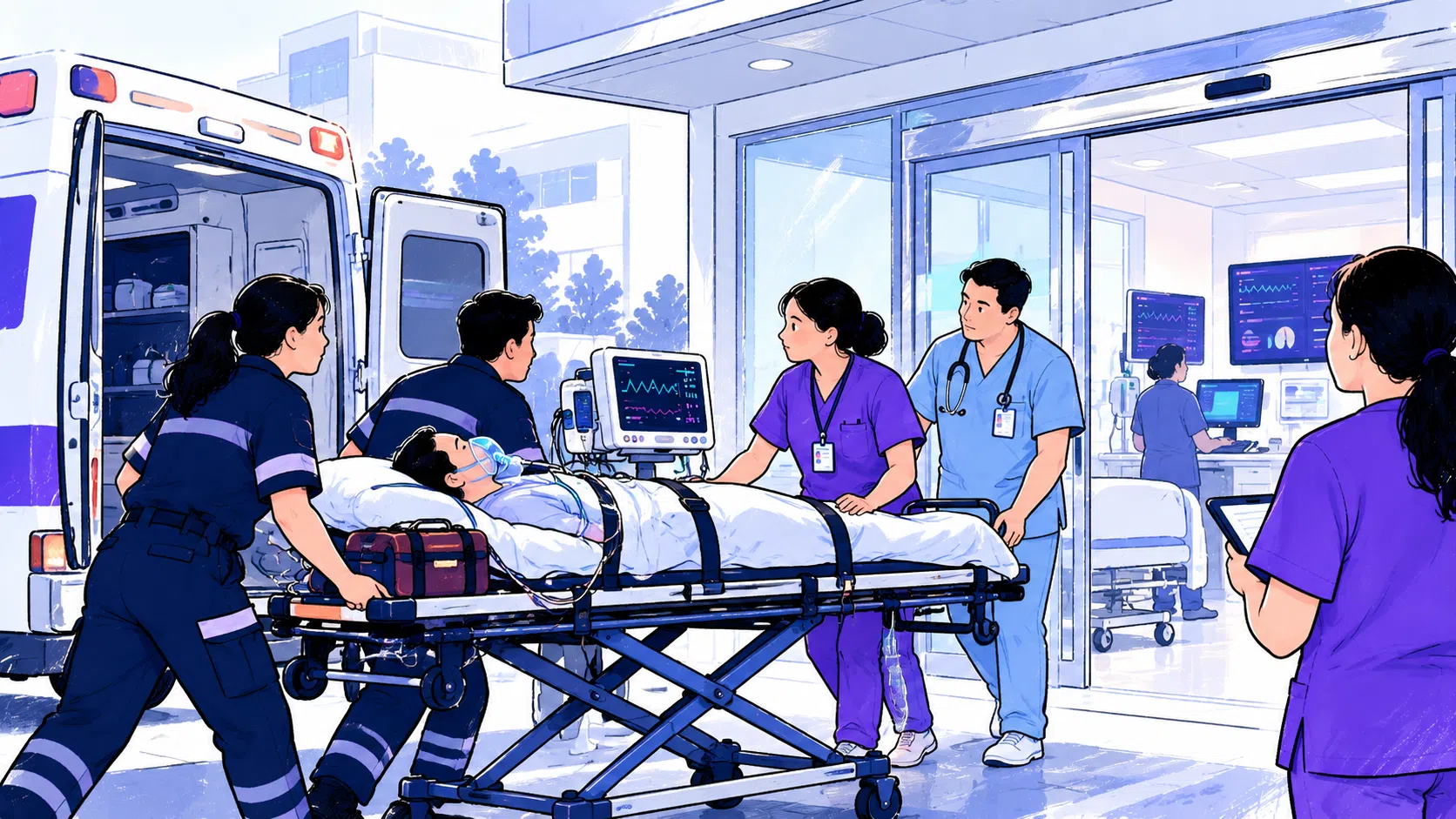
A patient being transferred between hospitals has, almost by definition, needed more than the first hospital could offer.
It might be someone who needs specialist heart care, advanced imaging, a neurosurgeon or an ICU bed the first hospital does not have. So they are moved, usually by ambulance and sometimes over long distances.
Transfers like these are a normal part of healthcare, especially where specialist services are concentrated in larger centres. They also carry some of the sickest patients through one of the least visible stretches of their care.
Between two hospitals
During a transfer, the patient has left one hospital but not yet reached the next. The sending team has handed over care. The receiving team is waiting. The ambulance crew is responsible for the patient, often with limited equipment, in a moving vehicle, sometimes for hours.
Neither hospital can see what is happening. The receiving team usually learns how the journey went when the patient arrives, from the crew and whatever paperwork travelled with them.
Transfers carry real risk
Moving a critically ill patient is not a neutral event. A review of the evidence on transferring critically ill patients, published in Critical Care in 2015, found that reported rates of adverse events during transfer ranged from 3 to 75 per cent, depending on how studies defined and measured them. Equipment problems accounted for a large share of incidents, and the reviewers found that up to 91 per cent of incidents were preventable.
The wide range reflects differences in how events were counted. The consistent message is that transfer is a period when things can go wrong, and that preparation, skills, equipment checks and communication make a real difference.
Why visibility matters on this journey
If a patient's blood pressure starts to fall or their heart rhythm changes during transfer, the ambulance crew will respond. But the specialist at the receiving hospital, who may know most about the patient's condition, has no way of seeing it or advising as it happens.
Continuous monitoring with data sent during the journey changes that. The receiving team can watch the patient's ECG and vital signs, see trends as they develop and prepare for the patient's condition on arrival, not the one described at the time of referral. Where video is available, specialists can speak with the crew on the way, and suggest changes to treatment or confirm where the patient should go on arrival.
It also closes a gap in the record. What happened between the two hospitals becomes part of the patient's clinical history, available to the team that takes over.
Hub, spoke and the road between
Many health systems link smaller hospitals, the spokes, with larger specialist centres, the hubs. Expertise flows from hub to spoke through data and conversation, and patients who need more are transferred.
The ambulance can be thought of as a spoke on the move. Lifesigns Smart Ambulance works on that idea: it monitors the patient during the journey and sends their heart tracing and vital signs to Lifesigns Nexus, so the receiving hospital can follow the journey as it happens. Where it has been set up, video and two-way calls connect the crew with specialists at the hub. When there is enough information, Nexus's AI also shows whether the patient's condition appears to be getting better or worse. The hospital that sent the patient can see that they arrived safely and how they travelled, which closes the loop for the team that made the call.
The transfer is still a journey between two hospitals. With the right connection, it no longer has to be a gap between them.