Leaving the ICU Is Good News. It's Also a Moment of Risk
Moving out of intensive care is usually good news. The patient is well enough to leave. Their monitoring, meanwhile, can drop from continuous to every few hours almost overnight. In the ICU, critically ill patients are watched closely by nurses who look after one or two patients each, with monitors tracking their vital signs continuously. When they improve, they move to a step-down unit or a general ward. There, a nurse may care for many more patients, and vital signs are usually checked at...
Sabapathy J
3 min read
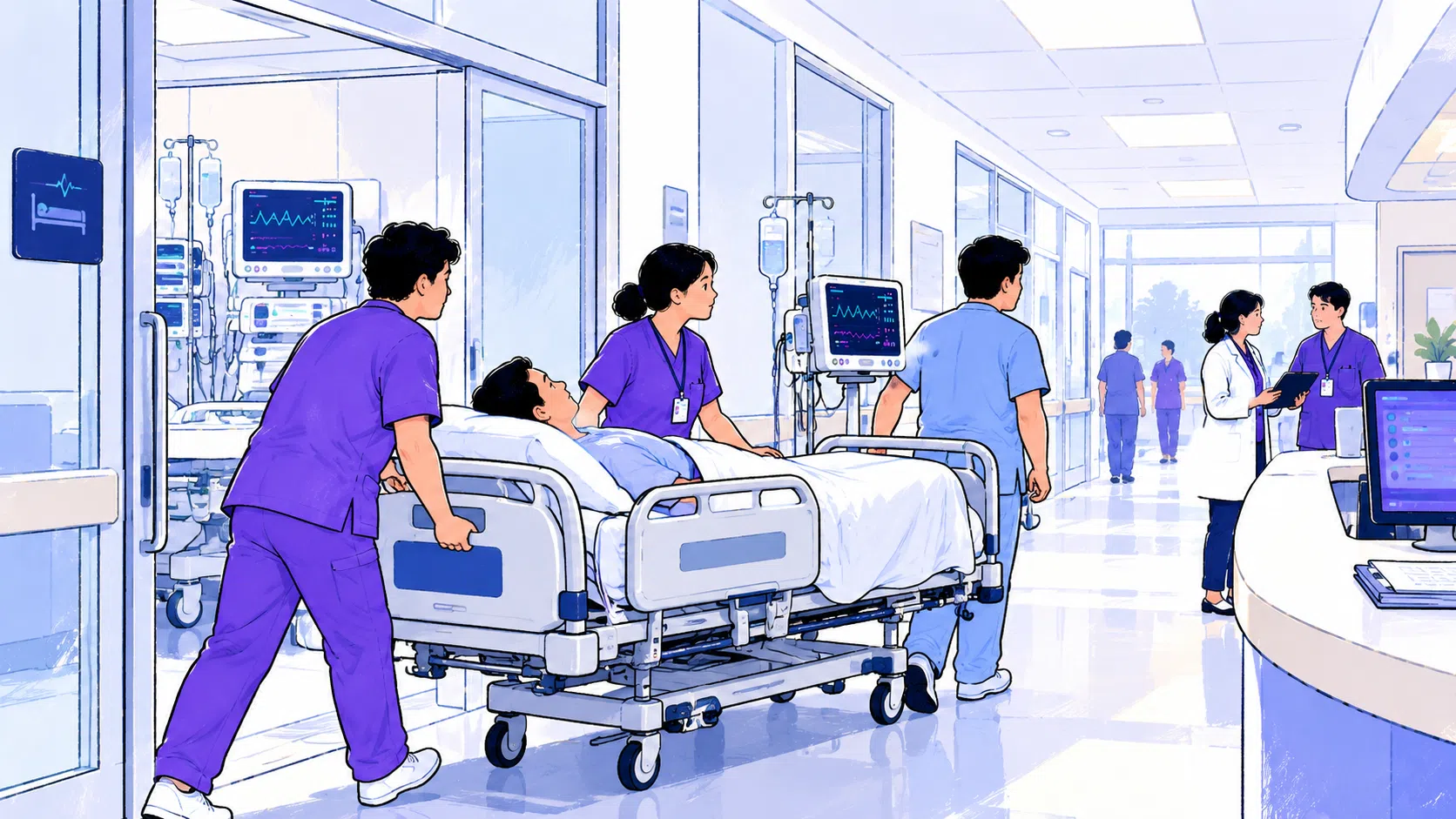
Moving out of intensive care is usually good news. The patient is well enough to leave. Their monitoring, meanwhile, can drop from continuous to every few hours almost overnight.
In the ICU, critically ill patients are watched closely by nurses who look after one or two patients each, with monitors tracking their vital signs continuously. When they improve, they move to a step-down unit or a general ward. There, a nurse may care for many more patients, and vital signs are usually checked at intervals.
That move reflects real progress. It is also one of the sharpest drops in monitoring a patient will experience in hospital.
Recovery is not a straight line
Patients leaving the ICU are better, but many are not fully well. They may still be weak, recovering from infection or surgery, or adjusting to changes in medication. Some keep improving steadily. Others get worse again: an infection flares, fluid builds up in the lungs, a heart rhythm changes, or breathing becomes harder once the extra support of the ICU is gone.
A large study of ICUs in the United States found that 6.1 per cent of patients discharged from intensive care were readmitted to the ICU during the same hospital stay, with readmission linked to how severe and complex their illness was when they left. Every one of those patients got worse after being judged ready to leave.
The monitoring cliff
Leaving the ICU often means a sudden drop in visibility. Within hours, a patient goes from continuous monitoring and close nursing to periodic observations on a busy ward.
There is a second loss too. The ICU team knew this patient well: their trends, their treatment, what concerned them. The ward team receives a summary. Useful context, such as how the patient's heart rate or oxygen levels behaved over the last few days, may not come with them.
If the patient starts to deteriorate again, the ward may take longer to notice, because it has less information to work with.
Carrying visibility onto the ward
There are two practical ways to soften that drop.
The first is to keep monitoring continuous for patients who have just left the ICU, at least for a while. Continuous ECG and vital signs on the ward mean a change in direction is visible when it happens, not at the next scheduled check.
The second is to carry the patient's history with them. If the ward team can see the trends and risk information from the ICU, they can judge whether a new reading is part of recovery or a sign of trouble.
Which patients get this, and for how long, is a clinical decision for each hospital. Many will start with those whose ICU stay was long or complicated, or whose illness left them with less in reserve.
Together, these make ICU discharge less of a step into the unknown.
Lifesigns builds on both ideas. Lifesigns Smart Monitoring uses wireless, wearable devices to keep tracking heart rhythm and vital signs on general wards and step-down units. Because the ICU, through Lifesigns Connected ICU, and the ward both feed into Lifesigns Nexus, the platform that keeps a patient's record together as they move between units, the trends and risk categories recorded in intensive care stay visible after the patient moves. On the ward, the AI in Nexus carries on assessing each patient's risk, so a patient who starts to slip back is easier to spot.
A ward is still not an ICU. The staffing, equipment and purpose are different. The aim is to keep watching a patient while they recover, rather than assuming that a quieter setting means lower risk.
Leaving intensive care should stay good news. The point is to make sure someone is still watching the patient's progress after they reach the ward.