A Monitor at Every ICU Bed Isn't the Same as Seeing Every Patient
Picture a large block of flats where a smoke alarm goes off somewhere. Everyone hears it. Nobody knows which flat it is, whether it is burnt toast or a real fire, or whether they should drop what they are doing and go and check. Nurses in an intensive care unit deal with a version of this many times a shift. What does an ICU look like? The intensive care unit, or ICU, is where hospitals look after their sickest patients. Every bed has a monitor showing heart rhythm, blood pressure, oxygen...
Sabapathy J
3 min read
Patient Monitoring Technology
Picture a large block of flats where a smoke alarm goes off somewhere. Everyone hears it. Nobody knows which flat it is, whether it is burnt toast or a real fire, or whether they should drop what they are doing and go and check.
Nurses in an intensive care unit deal with a version of this many times a shift.
What does an ICU look like?
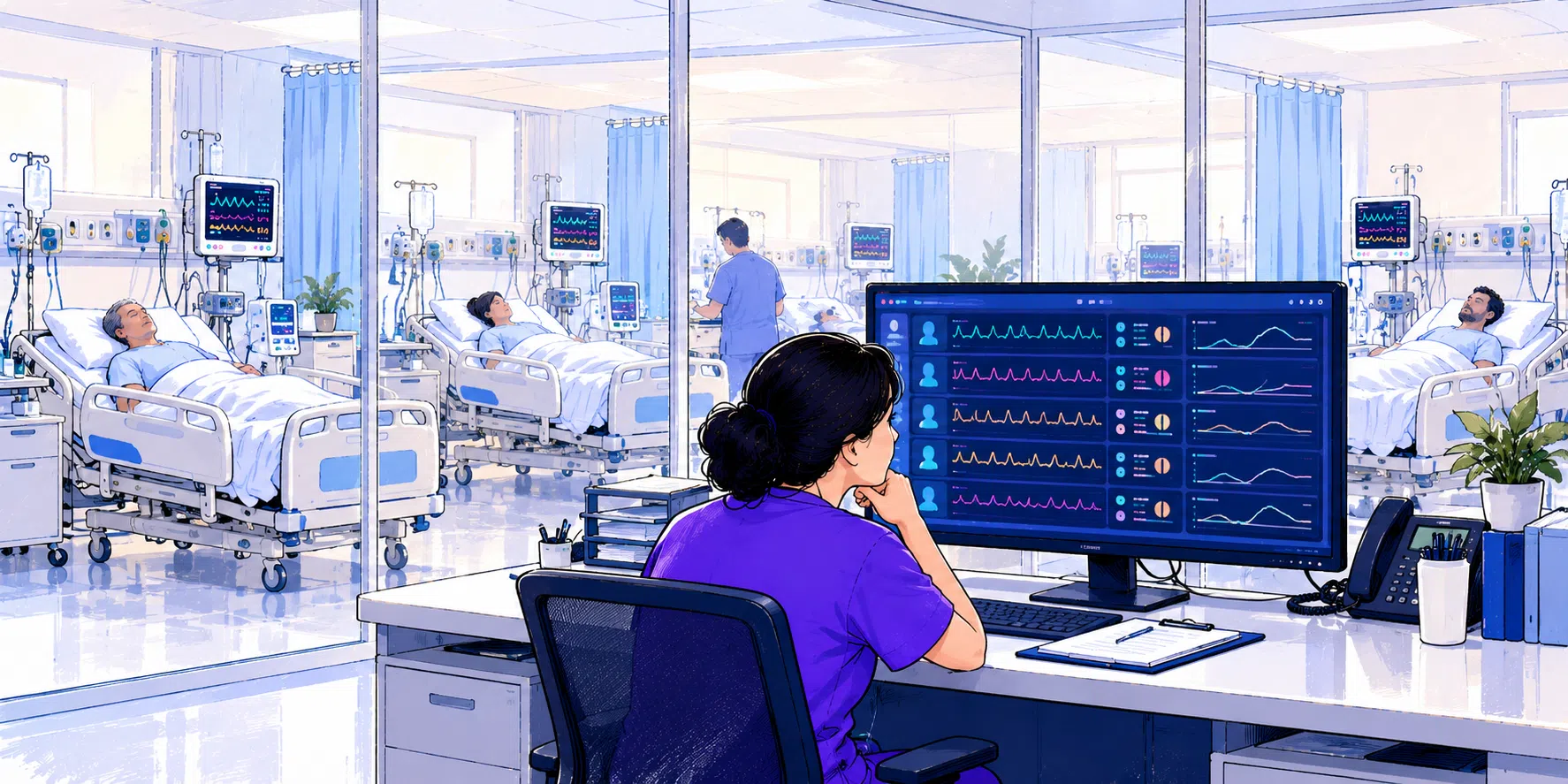
The intensive care unit, or ICU, is where hospitals look after their sickest patients. Every bed has a monitor showing heart rhythm, blood pressure, oxygen level and breathing, and it sounds an alarm when a reading goes outside a set limit. Around it sit other machines: a ventilator to help with breathing, pumps delivering medicines, and more.
It looks like the most closely watched place in the hospital, and in many ways it is. But the way the equipment is designed does not always match the way ICU teams work.
Why isn't a monitor at every bed enough?
A bedside monitor is built for the person standing next to it. It shows that one patient in detail. That works well when someone is at the bedside.
But ICU nurses often look after more than one patient, and doctors cover the whole unit. At any given moment, most patients do not have anyone looking at their monitor. A central screen can show several beds at once, but many central screens place the bedside displays side by side. They show readings and alarms, not which patient is most likely to need someone next.
Why do alarms make this harder?
Many alarms are set off by a patient moving, a loose sensor or a brief change that settles on its own. When alarms are frequent and often unimportant, staff reasonably learn to pause before reacting, just as most people in that block of flats wait a moment to see if the smoke alarm stops.
That habit makes sense most of the time. It is also the habit that lets an important alarm blend in with the rest. The problem is not careless staff. It is a setup that asks people to sort real warnings from noise, bed by bed, many times an hour.
What would help?
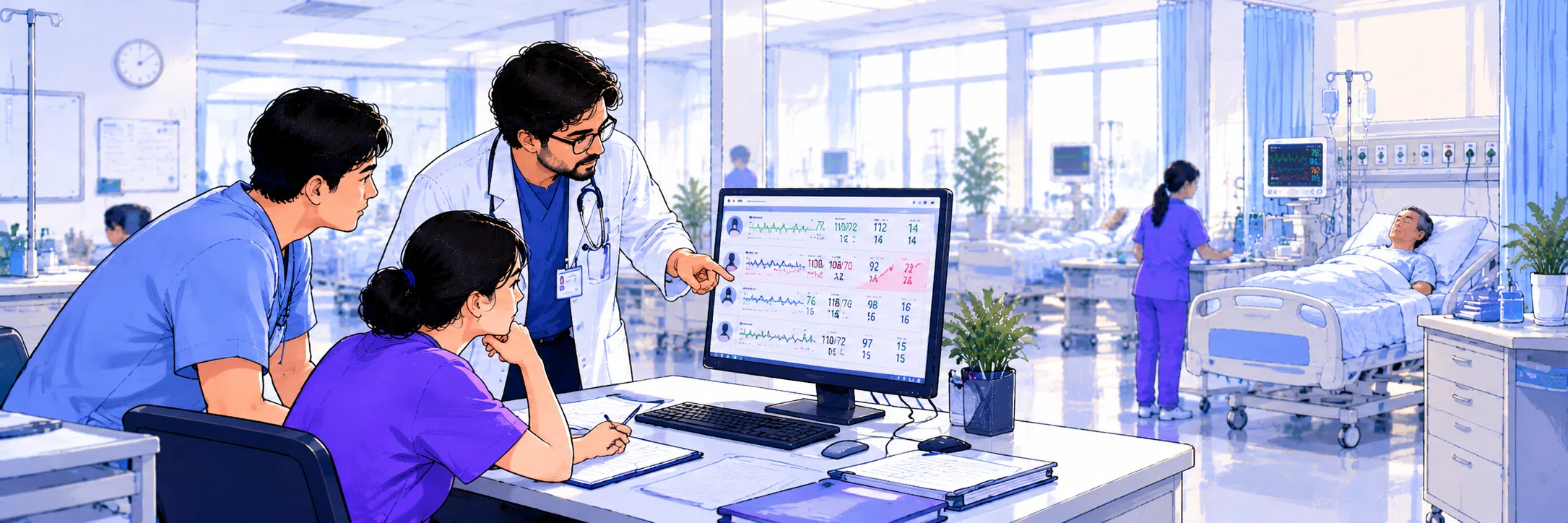
An ICU team spread across many beds needs a different kind of view: patients ordered by how their risk is changing rather than by bed number, trends that show direction rather than only the latest reading, alerts that separate patient problems from technical ones, and the background behind a change, such as medicines, test results and fluid balance.
That is the idea behind Lifesigns Connected ICU, which links the machines around each intensive care bed into one view. Data from compatible monitors, ventilators, pumps and other systems flows into Lifesigns Nexus, Lifesigns' monitoring platform. On a single screen, the ICU team can see every connected bed, ranked by how each patient's risk is changing, with the AI in Nexus showing what is driving each change. Alerts about the patient are kept apart from technical alerts, and staff can add a patient to a Watchlist to keep a closer eye on them. Where the hospital has set it up, the same view can be shared with a specialist at another hospital.
The benefit shows most at the busiest moments. At shift change, an incoming nurse can see at a glance who moved into a higher risk category overnight. On a thinly staffed night, a patient whose readings are drifting stands out even when nobody is at their bedside.
What stays the same?
Bedside monitors stay. They keep doing their job at the bedside. What changes is the layer on top, which helps the team see which patient is heading towards trouble so that an alarm is less often the first sign.