The Handover Can Start Before the Ambulance Reaches the Hospital
Emergency medicine has a name for the first hour after a serious injury or a sudden illness such as a heart attack or stroke: the golden hour. The idea is simple. The sooner the right treatment starts, the better the chances of a good outcome. For many patients, part of that hour is spent in an ambulance. The crew is busy keeping the patient stable. At the hospital, the emergency team knows someone is on the way, but usually not much more. What the hospital knows today A typical call from the...
Sabapathy J
3 min read
Patient Monitoring Technology
Emergency medicine has a name for the first hour after a serious injury or a sudden illness such as a heart attack or stroke: the golden hour. The idea is simple. The sooner the right treatment starts, the better the chances of a good outcome.
For many patients, part of that hour is spent in an ambulance. The crew is busy keeping the patient stable. At the hospital, the emergency team knows someone is on the way, but usually not much more.
What the hospital knows today
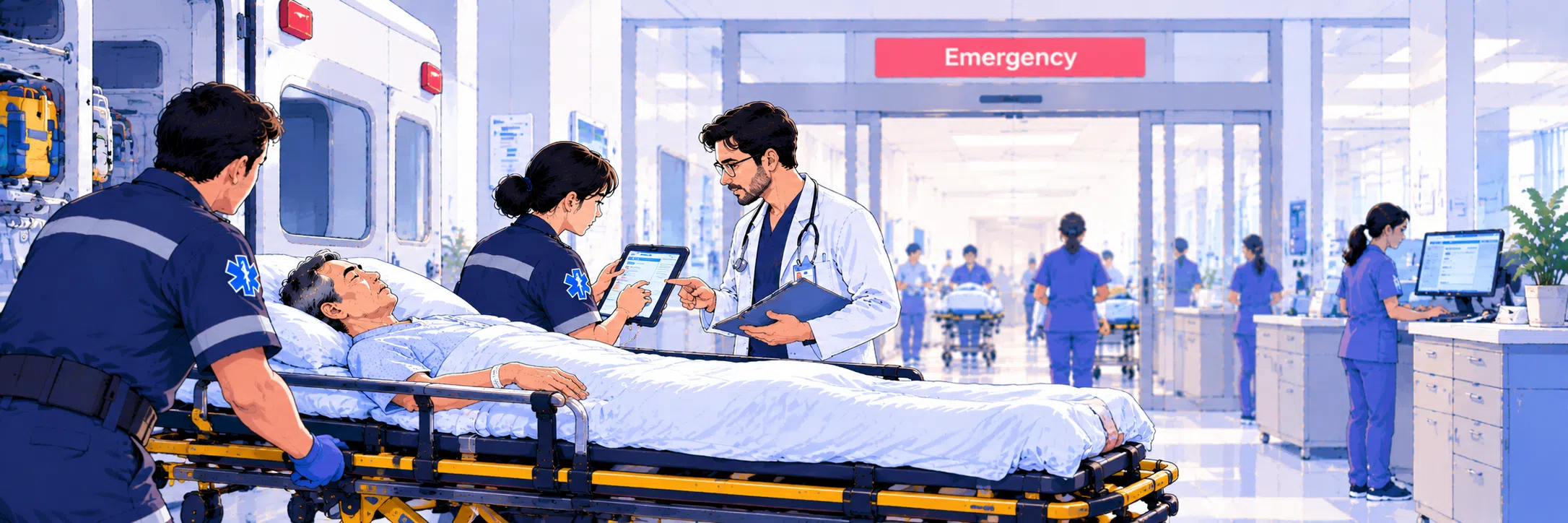
A typical call from the ambulance might say that a man in his sixties with chest pain is ten minutes out. When he arrives, the crew gives a quick verbal handover at the door. The hospital team connects him to their own monitor and starts assessing him again.
In that moment, useful information can slip away. How did his heart rhythm change on the way? Did his blood pressure drop when he was lifted into the vehicle? Was his breathing getting faster, or settling? The team sees where the patient is now, but not how he got there. Nobody is at fault here. The crew has been busy treating him, and the hospital has had no way to see what they were seeing.
Why some information cannot wait
Emergency care already treats some information as too important to wait for arrival. For a suspected heart attack caused by a fully blocked artery, known as a STEMI, US cardiology guidelines recommend that ambulance teams record a 12-lead ECG, a detailed heart tracing, at first contact. When the hospital sees that tracing before the patient arrives, it can have the team that reopens the artery ready, which shortens the time to treatment.
The same thinking applies well beyond heart attacks. If the receiving team can see a patient's heart rhythm and vital signs during the journey, they can have the right people, space and equipment ready. That might mean a resuscitation bay cleared in advance, a specialist called down before arrival, or blood tests and scans lined up to start the moment the patient comes through the door.
What changes when information travels ahead
Preparation starts sooner, while the ambulance is still on the road. The handover becomes a continuation rather than a restart, because the team can look back at what happened during the journey instead of relying only on a quick summary at the door. And the patient's record starts earlier: what the ambulance recorded becomes the first page of their hospital notes and stays available as they move through the hospital.
It works in both directions
Earlier visibility helps the crew as well as the hospital. A doctor watching the heart tracing during the journey can advise on what to look out for, or confirm that the patient should go straight to a specialist team. On longer journeys, such as those from smaller towns to a specialist centre, that shared view can matter for most of the trip.
This is the thinking behind Lifesigns Smart Ambulance, which monitors patients during the journey and sends their heart tracing and vital signs ahead to Lifesigns Nexus, the software platform the hospital team uses to see its monitored patients. Where the hospital has set it up, video and two-way calls connect the crew with emergency doctors or specialists. When there is enough information, the AI engine in Nexus also shows whether the patient's condition appears to be getting better or worse.
The patient still arrives at the same door. The team on the other side has been with them for more of the golden hour.