A Specialist Cannot Be at Every Bed, but the Patient Information Can Travel
There are far more ICU beds that need a critical-care specialist than there are specialists to stand beside them. An intensivist is a doctor who specialises in looking after critically ill patients. In large hospitals, intensivists lead intensive care teams around the clock. In many smaller hospitals, and at night in some larger ones, there may be no intensivist on site at all. The patients in those beds can be just as sick. What differs is who is there to review them. Remote ICU monitoring...
Sabapathy J
4 min read
Patient Monitoring Technology
There are far more ICU beds that need a critical-care specialist than there are specialists to stand beside them.
An intensivist is a doctor who specialises in looking after critically ill patients. In large hospitals, intensivists lead intensive care teams around the clock. In many smaller hospitals, and at night in some larger ones, there may be no intensivist on site at all. The patients in those beds can be just as sick. What differs is who is there to review them.
Remote ICU monitoring starts from a simple idea: if the specialist cannot travel to every patient, the patient's information can travel to the specialist.
How remote ICU monitoring works
In a remote ICU model, often called tele-ICU, intensivists at a central location review patients in one or more ICUs using live monitoring data and video. They can check trends, look at test results, speak with the bedside team and, within the hospital's rules, help make clinical decisions.
A common setup is hub-and-spoke. A large specialist hospital acts as the hub and smaller hospitals act as spokes. Expertise flows from the hub to the spokes through data and conversation, often before any patient needs to be moved.
What the evidence shows
Tele-ICU has been studied for well over a decade. One widely cited study at a US academic medical centre followed 6,290 adult ICU patients before and after a tele-ICU programme began. Hospital deaths fell from 13.6 per cent to 11.8 per cent, and the average hospital stay dropped from 13.3 to 9.8 days. That was one hospital, compared before and after, so the results will not apply everywhere. It does show what can change when specialist attention reaches more patients.
Video is not enough
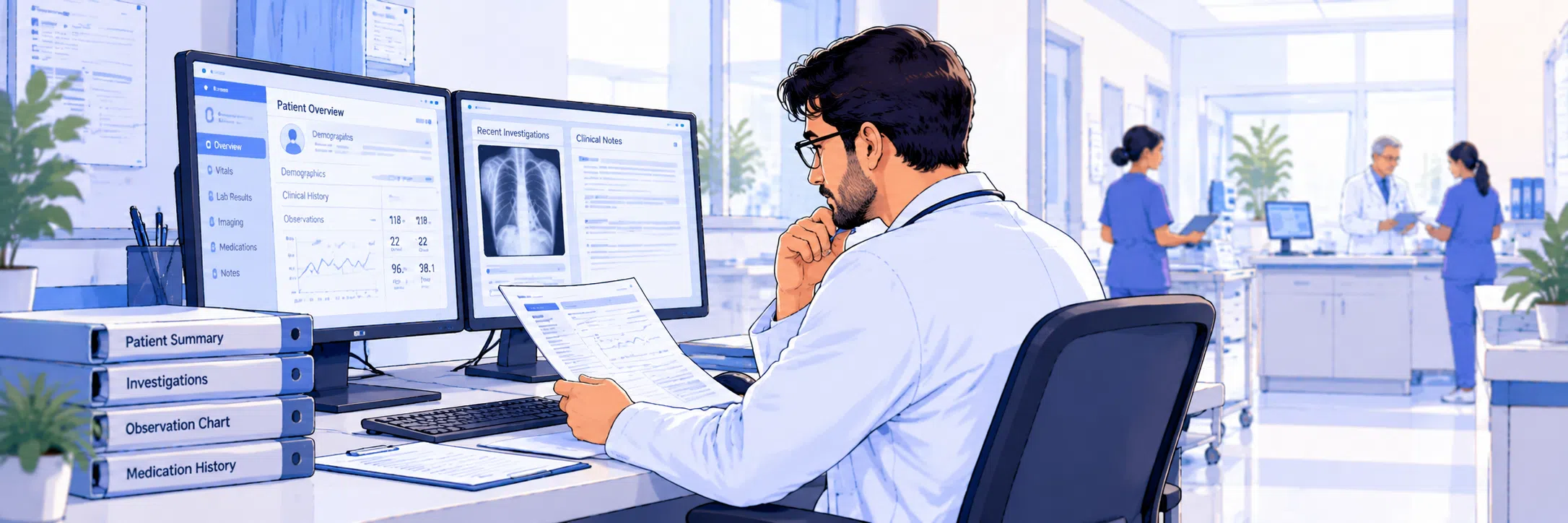
It is tempting to think of tele-ICU as a video call with the bedside. Video helps, because the specialist can see the patient and talk to the team. But a critically ill patient's condition is told through numbers over time: blood pressure, ventilator settings, oxygen levels, fluids in and out, test results.
Picture a 2 AM call about a patient whose blood pressure is falling. To advise well, the intensivist needs to know how fast it has fallen, which medicines are running and at what doses, how much fluid the patient has had, and what the latest tests show. With connected data, those answers are on screen. Without it, each one becomes another question down the phone.
Knowing which patient to look at first
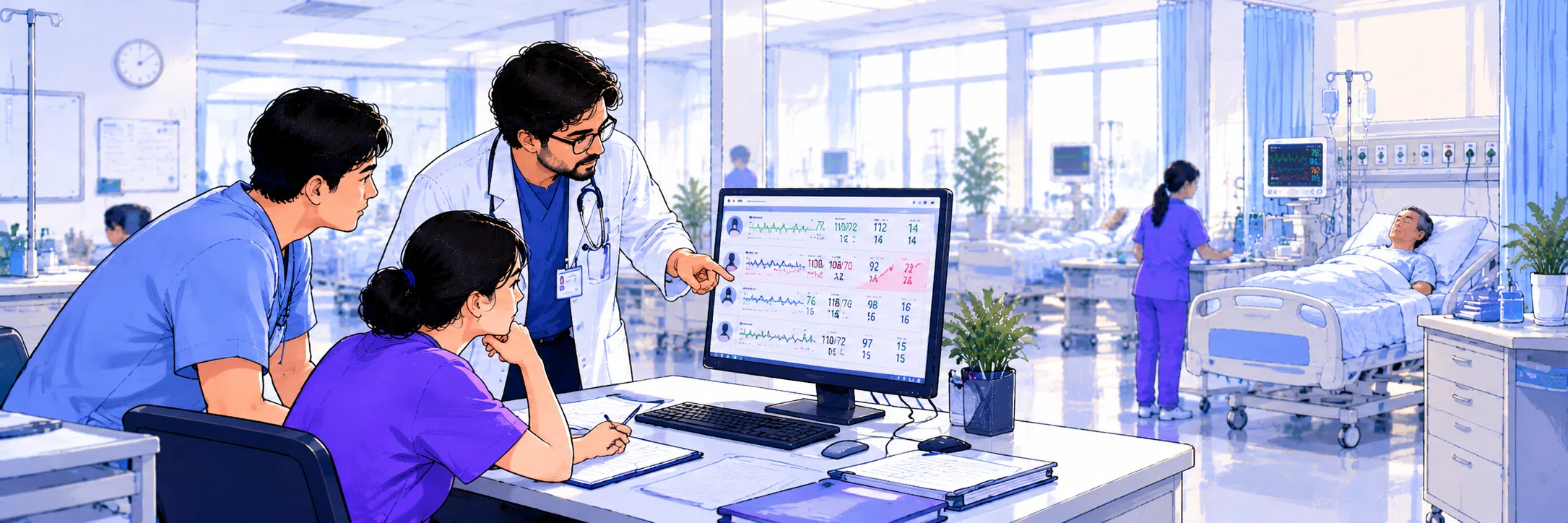
A remote specialist may be covering dozens of beds across several hospitals. Live data from all of them is a lot to watch, so the harder question is often which patient needs attention first.
Predictive AI helps here. By reading each patient's vital signs as they change, including small shifts over hours, it can estimate whose risk is rising and show the reasons. A specialist who sees that a patient in a spoke hospital has moved into a higher risk category, because their heart rate and breathing have been climbing together, can call that team early instead of waiting to be called.
How Lifesigns supports remote ICU care
Lifesigns Connected ICU links the machines around each intensive care bed, such as monitors, ventilators and pumps, along with lab systems, into Lifesigns Nexus, the software platform where care teams see their monitored patients. From Nexus, remote intensivists can see many beds across one or more hospitals. The AI engine in Nexus groups those patients into four risk categories, from Standard Care for patients who appear stable to Resuscitation for those who need urgent attention, with the reasons for each, so the specialist knows where to look first. Where the hospital has the setup, they can join the bedside team by live video and steer the camera themselves. Lifesigns Smart Ambulance, which monitors patients on the move, also lets a hub follow a patient during transfer.
A specialist is not a monitoring team
Remote intensivist review is sometimes confused with central monitoring. They are different jobs. A remote intensivist is a doctor who assesses patients and helps make clinical decisions. A central monitoring team is made up of trained staff who watch patient data and alert the clinical team when agreed limits are crossed. Both are useful, neither replaces the other, and neither replaces the team at the bedside.