Remote Patient Monitoring Can Run 24/7. Who Keeps Watch?
How remote patient monitoring creates real-time visibility, and why continuous data still needs dedicated attention.
Vamsha, Prince
2 min read
Remote Patient Monitoring
Healthcare technology has changed how much patient information can be captured, shared, and seen in real time.
Connected devices can now track vital information such as heart rate, breathing, oxygen saturation and blood pressure, and make it available remotely, whether a patient is being transported, admitted to hospital or recovering at home.
That gives healthcare teams real-time visibility at a scale that was not previously possible.
In settings where patient observations are taken periodically, there are natural stretches of time between one reading and the next. Each reading shows what the patient's vital signs look like at that moment, but not necessarily how they changed during the minutes or hours in between.
Continuous real-time patient monitoring fills in much more of that timeline.
That is a major advance. But getting all that information onto a screen creates another very practical problem.
Who can stay in front of that screen the whole time?
Alerts help, of course. But as monitoring expands across more patients, those alerts still need to be noticed and understood in context.
Real-time patient data can stay on a screen around the clock. Clinical teams cannot spend every minute in front of one.
A digital dashboard is only part of the answer.
From Periodic Readings to Real-Time Visibility
The value of continuous monitoring is fairly easy to understand. Whenever measurements are taken at intervals, there is information between those measurements that are not captured.
Research is beginning to show what added visibility means. In a 2025 study at Ramaiah Memorial Hospital in Bengaluru, a remote early-warning system flagged 37 of the 38 patients who later required ICU transfer for deterioration, with the first alerts appearing at least 18 hours beforehand on average. It also generated alerts in many patients who did not deteriorate.
That second finding matters just as much as the first.
Continuous monitoring can help bring developing changes into view earlier. An alert, however, does not automatically tell us what is happening with the patient or whether something requires action.
That still needs attention and context.
When Real-Time Data Needs Continuous Oversight
This is where the workflow around remote patient monitoring becomes important.
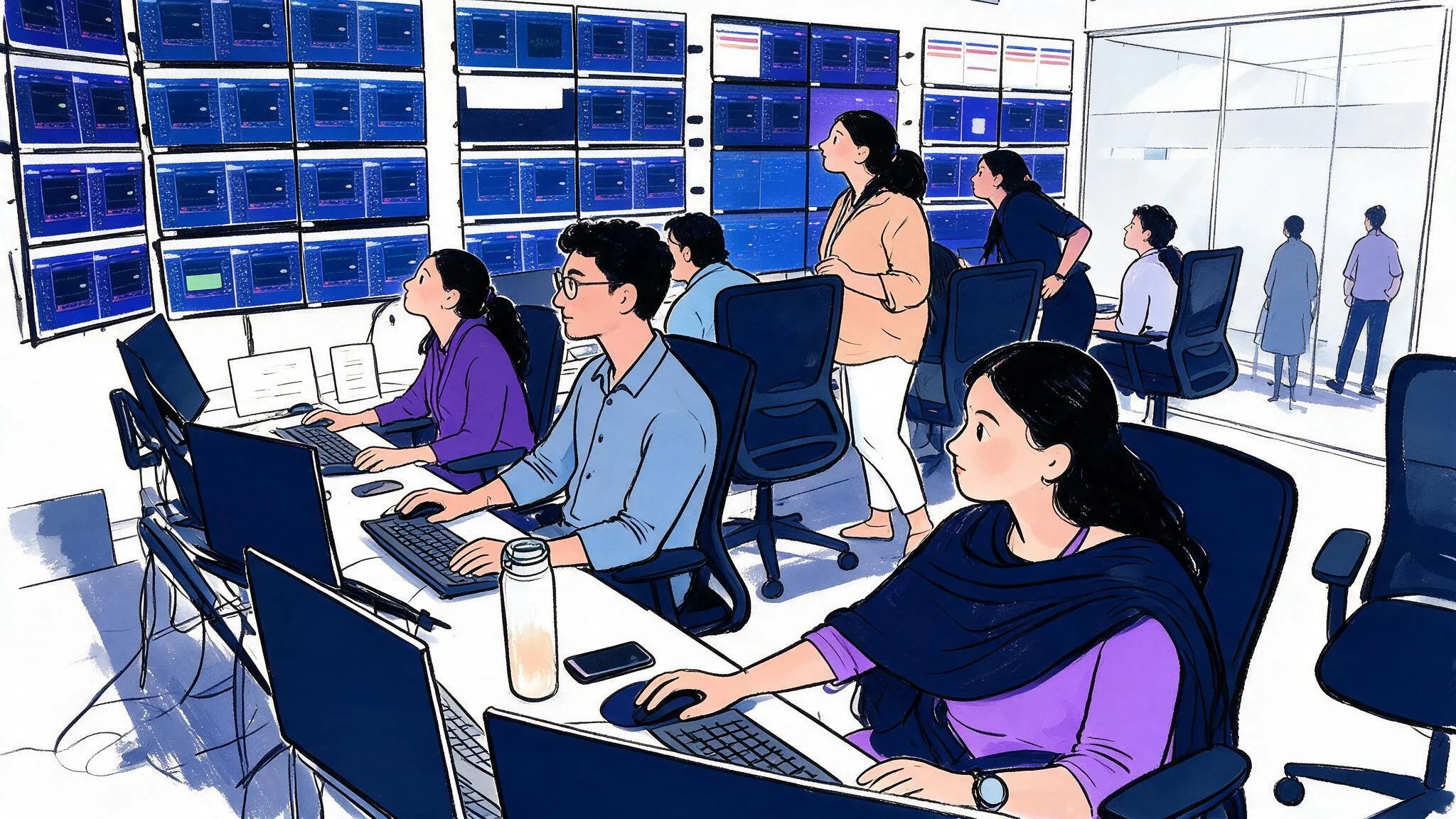
At Houston Methodist, continuous monitoring was introduced across approximately 2,700 non-ICU beds in eight hospitals, with patient information watched around the clock through a centralized virtual operations center. During the review process, about half of device-generated alerts were resolved at the central monitoring stage before they needed to reach frontline teams. Read the 2026 implementation report.
That is a useful distinction.
The devices collect information. The dashboard makes it visible. A monitoring workflow helps determine what happens next.
For Lifesigns, that same need eventually led to a dedicated Central Monitoring Team and monitoring command center.
The model has since grown from a small monitoring operation into Lifesigns Central Monitoring Services, supporting hospitals across India.
Continue reading: [How a Central Monitoring Command Center Supports 24/7 Remote Patient Monitoring]